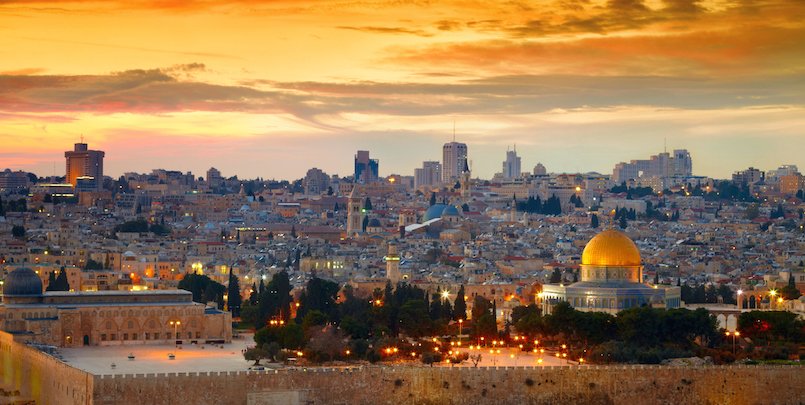
Israel Palestine Conflict Continues As Israel Refuses To Obey U.N Decision

JERUSALEM — Undeterred by a resonating annihilation at the United Nations, Israel’s administration said Monday that it would push forward with a large number of new homes in East Jerusalem and cautioned countries against further activity, announcing that Israel does not “choose not to retaliate.”

Only a couple days after the United Nations Security Council voted to denounce Israeli settlements, Jerusalem’s metropolitan government flagged that it would not down: The city plans to affirm 600 lodging units in the dominatingly Palestinian eastern segment of town on Wednesday in what a top authority called a first portion on 5,600 new homes.

The insubordinate stance mirrored a swarming outrage among Israel’s star settlement political pioneers, who not just reprimanded the United States for neglecting to obstruct the Council determination, additionally guaranteed to have mystery insight demonstrating that President Obama’s group had arranged it. American authorities firmly denied the claim, yet the sides appear to be balanced for more weeks of contention until Mr. Obama hands over the administration to Donald J. Trump.

Executive Benjamin Netanyahu has lashed out at Security Council nations by controlling political contacts, reviewing emissaries, cutting off guide and summoning the American envoy for a chiding. He wiped out an arranged visit this week by Ukraine’s leader even as he communicated worry on Monday that Mr. Obama was arranging more activity at the United Nations before his term closes one month from now.

The executive guarded his striking back. “Israel is a nation with national pride, and we don’t accept punishment silently,” he said. “This is a mindful, measured and energetic reaction, the common reaction of a sound people that is making it clear to the countries of the world that what was done at the U.N. is inadmissible to us.”

The Security Council determination that passed Friday censured Israeli settlements in the West Bank and East Jerusalem as an “egregious infringement under universal law” and an obstruction to peace. The Council affirmed it 14 to 0, with the United States going without as opposed to utilizing its veto, as it has before.

Mr. Trump openly squeezed for a veto of the determination and has picked a settlement advocate as his organization’s diplomat to Israel. He swung to Twitter on Monday night to air grumblings that the United Nations “is only a club for individuals to get together, talk and have a decent time.”

Palestinian pioneers clarified that they would utilize the determination in universal bodies to press their body of evidence against Israel. With the imprimatur of a United Nations finding of wrongdoing, they said they would battle to require that different nations not simply mark items made in the settlements, but rather boycott them.

“Presently we can discuss the blacklist of all settlements, the organizations that work with them, and so on, and really make lawful move against them in the event that they keep on working with them,” Riad Malki, the Palestinian outside pastor, was cited as saying by the Palestinian news media.

He illustrated different strides the Palestinians could now take, utilizing the determination to press the International Criminal Court to indict Israeli pioneers, record claims for the benefit of particular Palestinians uprooted by settlements and inclination the worldwide powers to figure out if Israel is abusing the Geneva Conventions.

“We are hoping to devise a far reaching vision, and ideally 2017 will be the year when the Israeli occupation closes,” Mr. Malki said.

Israeli authorities said such declarations demonstrated that the determination really undermined possibilities for an arranged settlement in light of the fact that the Palestinians now have less impetus to get together. By proclaiming Israeli settlements unlawful, they said, the United Nations basically took away the one chip that Israel needed to exchange, which means arrive.

“The Palestinians are pursuing a discretionary and legitimate war against Israel. That is the system,” Ron Dermer, the Israeli diplomat to the United States, said in a telephone meet. “Their technique is not to arrange a concurrence with Israel on the grounds that an arrangement is give and take. They need take and take.”

Israel’s settlement extend, once a dispersing of houses over the supposed Green Line denoting the outskirts before the 1967 Arab-Israeli war, has become significantly throughout the years. In 2009, the year Mr. Obama took office, 297,000 individuals lived in West Bank settlements and 193,737 in East Jerusalem. That expanded to 386,000 in the West Bank before a year ago over and 208,000 in East Jerusalem before the end of 2014, as per Peace Now, a gathering that contradicts settlements.

Israeli authorities take note of that when Mr. Netanyahu submitted to a 10-month settlement solidify looked for by Mr. Obama in 2009, the Palestinians still did not consent to consult until just before time ran out. Be that as it may, the expansion of more than 100,000 pioneers amid Mr. Obama’s residency persuaded him that the time had come to change approach at the United Nations, assistants said.

The 618 lodging units to be conceded fabricating grants in East Jerusalem on Wednesday have been in progress for some time, and the arranging board of trustees meeting motivation was set before the United Nations acted. In any case, the board of trustees administrator said he was resolved to go ahead with units totalling 5,600.

“I won’t get worked up over the U.N. then again whatever other association that may attempt to direct to us what to do in Jerusalem,” Deputy Mayor Meir Turgeman, the arranging board of trustees administrator, told the daily paper Israel Hayom. “I trust that the legislature and the new organization in the United States will give us force to proceed.”

In spite of the fact that he didn’t indicate which ventures he had at the top of the priority list, Ir Amim, a private gathering following settlements in East Jerusalem, said he was most likely alluding to ventures in Gilo and Givat Hamatos. Betty Herschman, the gathering’s executive of global relations and promotion, said it was “insubordination shown after Trump’s decision, now strengthened by the U.N. determination.”

Anat Ben Nun, the chief of improvement and outer relations for Peace Now, said such development was hazardous. “Netanyahu’s endeavour to vindicate the U.N.S.C. determination through endorsement of arrangements past the Green Line will just damage Israelis and Palestinians by making it more hard to touch base at a two-state arrangement,” she said.

Israeli pioneers said they had no motivation to quit building. The Security Council determination “was ridiculous and completely expelled from reality,” said Oded Revivi, boss remote agent for the Yesha Council, which speaks to West Bank pilgrims. “Israeli building strategies are set in Jerusalem, not New York.”

For the fourth day, Israeli authorities blamed Mr. Obama’s group of ambushing them at the United Nations. While the White House denied it, Israeli authorities indicated a meeting between Secretary of State John Kerry and his New Zealand partner a month prior to the Council vote talking about a determination on the Israeli-Palestinian clash. New Zealand was a supporter of Friday’s measure.

Mr. Dermer, the envoy, said Israel had other, non-public data demonstrating the Obama organization’s inclusion however given no proof and would not detailed past saying it would be given to Mr. Trump’s group when he takes office.

“They not just did not get up and stop it, they were behind it from the earliest starting point,” Mr. Dermer said. “This is the reason the executive is so furious. Will face it.”

Israeli authorities stressed that Mr. Kerry would utilize a coming discourse or a meeting in France to diagram an American peace arrange for that would be threatening to Israel’s interests. Mr. Kerry’s office had no remark.

The wrath of Mr. Netanyahu’s reaction has created discuss at home. Mitchell Barak, a political specialist, said the political left considered the determination “an epic remote arrangement and discretionary catastrophe” by Mr. Netanyahu.

In any case, to his base, the Security Council activity affirmed what they trusted up and down, that Mr. Obama is intrinsically hostile to Israel, thus the PM seems to be a champion assailed by foes. “For them,” Mr. Barak said, “Netanyahu rises up out of this unscathed, as the solitary scalawag cave of contempt.”


Throwback to latest iPhone app development trends

As we bid a good bye to 2016, we crash through the tech trends that 2016 witnessed in the year. 2016 without a doubt bought a number technological trends with respect to the programs, platforms and applications. So, here we are glancing over the latest iPhone app development trends that made 2016 a year of tech junkies.

1.Congruence across number of devices

One of the popular trend observed was that of sync with the multiple devices. The cloud technologies are aiding in creating the congruency between the iPhone applications and multiple devices. This is enabling the developer in reducing the size of the application as well as enhance the user interface and experience.

2.Better security applications

About75% of applications secured lower than the brink mark for security, states a reported generated by 2015 Gartner app security report. This also clears that there is a significant rise towards more secure in-app purchase modes. Along with threat, the developers of iPhone applications are expected to increase the threshold app security limits which would further add reliability to the iPhone applications.

3.Location tracking approach to enrich marketing efforts

With the objective of gaining a better understanding of a customer’s need, want and demand the business are inclined towards the integration of location tracking in the application. “iBeacon” being a standard location tracker requires a large database inputs which utilizes the major chunk of battery leading to power draining of the mobile phones.

In order to gain a lead in this trend, the developers dedicatedly need to figure out ways in which they can optimise the functionality of this application without compromising on the mobile batteries.

4.The open source swift

The language of application development has turned open source which adds up to its adoption rates. There are inarguably numerous developers who agree that ‘swift’ is so far an easier language of development in comparison with Objective-C. The predictable trends suggest that due to the variety of new developer-friendly features swift would be extensively used by the developers.

5.Diffused backgrounds in trend

It is technically not possible to have diffused backgrounds for all kinds of applications, however, the developers are adapting to this trend to a greater extent. A number of designer and developers are opting for diffused backgrounds in the application along with highlighted call-to-action button. The aim of this particular style is to grab the attention of the user exactly where it is required the most.

6.Freebie applications

The trend also predicts that most of the applications will be free for the users. Even though the application developed by e-commerce portals are free already yet non – commerce applications shall be made free. Currently, there are 75% of application that is freely available however the reports suggest that perhaps this number shall increase up to 93% in the coming year. However, the app developers need to ace at maintaining the security, avail the right kind of marketing an advertising technique and develop upgrades.

7.Emphasis on mobile commerce

The mobile commerce is growing aggressively in the years ahead. Going by the trends any web developer who is willing to expand the skill sin the tech industry must consider learning mobile application development. The demand is huge in the market currently and it wouldn’t come down at any point in time. Every e-commerce portal is keen on launching an application as well.

There are tremendous growth and improvement opportunities that 2017 foresees in the years ahead. Every technology needs to be equipped developers to enhance the experience and counter the shortcomings. The new trends are supposedly opening the channels for a lot of developers in testing and broadening their skills.

HomeKit- The much-needed boost to Apple’s next-gen revolution?

We are all familiar with HomeKit (HK), the flagship of Apple’s plans for home automation. It’s a piece of software built into Apple’s mobile operating system, iOS, that permits use of different products at the same time, such as switching your lights off when you are lazy enough to not get up, or automatic detection of sunsets and sunrise etc.

Its release gained traction after the unveiling of iOS 10 at WWDC earlier this year, where Tim Cook introduced to the world the new Home app, which makes it much easier to get several working devices together. For an instance, when you go for work each morning, you would want to switch off the lights or turn on the security devices. To shift between applications normally takes a long time, so much that you actually prefer to do it physically.

HK has been designed by Apple to resolve that problem, by permitting devices from several manufacturers to work together. So, instead of making use of several apps to control your lights or security camera, HomeKit will link all your devices together and control them all with a single command.

Its use seems such a good idea, although it wasn’t noticed much when it launched in 2014. HK was ignored by most of the producers of home automation devices back then. Hopefully, with the release of iOS 10, the new features will help them to get the ball rolling.

Recommended Blog: Changing trends in application development of iOS

The users can work with a number of devices. Initially, HomeKit was not compatible with security cameras. However, with the addition of this in iOS 10, Apple can now focus on the significant market of home security too. A number of corporations in this field are looking forward to integrate with the HomeKit app, some of them rolling out later this year.

One of the biggest difference in iOS 10 as compared to previous versions is that it is supported by an official app, called Home. Bundling with iOS should help collaborations with HomeKit increase. Till date, HK has been phenomenal in the areas of lighting and better management of energy bills.

Apart from all of this, Apple has major plans to enable you to control devices using Siri’s voice command. It really sounds like the next big thing in revolutionary tech market. Being an intelligent AI that Siri is, you would be able to issue specific directions like controlling the room temperature, or turning off the lights with a simple voice command. Furthermore, there exists a Home app on Apple Watch too, for controlling the devices without picking up the iPhone. HomeKit devices can also be controlled remotely over the internet.

Thus, its incoming into the market changes a lot of equations for Apple.

Aleppo, ISIS and the Middle East: Where are the International Relations headed?

The victory of Bashar al-Assad in the approximately six-year old Syrian Civil War recently is a great news in the fight against Islamist extremism. Aleppo, once the largest and most populated city of Syria, was under the control of the moderate rebels for a long time, until it was reclaimed by the Assad regime lately, thanks to the Russian intervention.

The implications of the recapture of Aleppo are immense, primarily because it leaves Bashar al-Assad in control of the majority of Syria, including almost all urban areas. Furthermore, it strengthens his assertion of his being the sole legitimate sovereign ruler of the nation, thereby garnering support from the international community. Indeed, it is a pivotal moment for him.

However, since the Arab Spring of 2011 and the ongoing crisis in Middle East, one question seems particularly important- Where are the International relations headed for the Islamist countries?

Indeed, the concept of international institutions has been directed by western oriented norms right from the start, intellectually sustained under the guiding principles of the International Law Theory. However, does it truly mean that the recent tumultuous times are an onslaught of the erstwhile IR policies framed by the west? The phenomena of the birth of ISIS can largely be attributed to the abysmal policies of the west for reason far too selfish and are likely to remain the same for years to come, until it leads to the destruction of either of them. In that essence, we can anticipate the International Relations are likely to deteriorate than get any better.

We live in an ear of Western retrenchment. Since times immemorial, the West had dominated the world views. However, the dramatic rise of the ‘Rest’ in the Middle East has attracted sharp reactions among the critics and the public alike, which can be mostly characterized by the anxiety of the world towards the Islamist Jihad (or the Holy War). The need to comprehend the new geo-political and cultural landscape is now more than ever, especially by the academicians of International relations, and to eradicate the crisis altogether rather than curtailing it by merely targeting ISIS should be the focus of the current generation of policymakers.

In determining a viable solution to the crisis of middle east, one has to focus on the fundamentals of Islam in the arena of International relations, which forms the basis of decision making for more than 50 Muslim countries of the world. It therefore follows that the attitudes, behaviors and interpretations and interactions of these nations, including the Jihadist groups like ISIS, will be based on these same principles. In that sense, going beyond the idea of Jihad as the axis of Islamist international relations in engaging with ISIS and other groups will be a logical step to curb them.

The school of International Relations has not always invited a pluralistic discussion in world affairs. The ignorance of ‘third world’ nations by the IR academy since Cold War now needs to be changed. The West is still hegemonic after all, but with the rise of new centers of power, we also come across new centrisms. Thus, provincializing the West in our analytical interpretations can be the next possible way to a more effective and equitable path to global governance.

Xi Xinping- CEO, China: A Force that needs reckoning?

The dominance of China across the world is not unknown to many. With a recent video going viral on the internet under the question “Who most wants to overthrow China?” that depicts the phantasmagoria of Communist Party’s nightmares of Western subversion, it broadly depicts Chinese public sentiments towards a government far more oppressive and tyrannical than any other, and questions the long standing communist rule in the country itself- A rule of despotism under Xi Xinping, the CEO of China.

China is preparing itself for the 19th five yearly congress which is scheduled in 2017. If Xi Xinping, the current president of Chinese Communist Party survives the 19th Congress, China will have overtaken the erstwhile Soviet Union as the world’s longest- lasting Communist dictatorship. Although growth during his tenure has been modest, remaining just above 6% per annum, the previous five years have been instrumental in bringing forth the true ambitions of China, and more necessarily it’s ruler, who is leading the country in dangerous directions- economically, politically and internationally.

Xi has spent most of his initial term accumulating power in his own hands. The idea of “collective leadership” of his predecessor, Hu Jintao, has now been replaced by a more individualized form of despotism, revolving around the personality cult known as Xi. He currently heads most of the groups in charge of running the economy, similar to what a CEO does for a corporation. The next congress might as well be an opportunity for him to fortify his power, which might allow him to defy the rules that have confined his previous counterparts to two terms.

In 2016 a major global leader, only in the last phase of his job as head of an entity containing more than a billion people but whose governance and leadership had been beset by crisis and confusion in recent years, Xi Xinping can be best described as a godfather to a Mafia clan, as noted by Chinese writer and democratic activist, Yu Jie.  Yu describes Xi and his sent-down generation as those have ‘zero real understanding or sympathy with democracy’. He goes on to say that Maoism is the only systematic, comprehensive and accessible body of ideas that Xi concurs to. His words are extreme, but they certainly don’t seem incorrect.

While Xi may be the face of a renewed and a more strengthened China, it would be still unwise to compare him with the likes of Mao. It is true that Xi derives his power from his ability to harmonize with his Party’s interests. Thus, looking at Xi outside the milieu of the Communist Part of China (CCP), therefore, means that one is looking at something that in a sense has no existence at all. Unlike Mao, Xi never grew into the Party, but always belonged to it. He has no existence discrete from the culture of his Party, and no autonomy without it. The point of him being a Godfather of China, therefore, seems no longer relevant. The truly powerful, as history teaches us every now and then, locate their power far away from their own selves.

Thus, although Xi is determined to restructure China so as to present it as a force to reckon with in the international arena, it is also crucial that such profound ambitions be put in perspective, so as to ensure they don’t lead to conjuring results.